
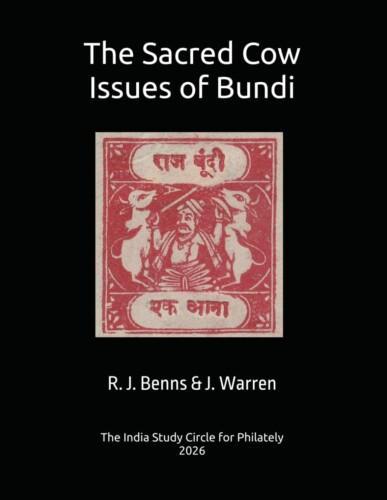
A number of Indian princely states (semi-autonomous kingdoms and principalities in the Indian subcontinent, ruled by local rulers under the indirect control of the British administration of India) issued their own stamps in the late 19th and the first half of the 20th century. These stamps are often endearingly called the 'uglies' due to their crude production methods.
A new 172-page book on the stamps of one of the states - Bundi - has been released recently by the Indian Study Circle for Philately, a UK based organisation. Bundi was a princely state in the Rajputana region (present-day Rajasthan in north-west India). It issued postage stamps from 1894 until the Bundi state postal services were merged into India’s postal system after Indian Independence. These postage stamps were valid within the state. For mail sent outside Bundi, British India postage stamps were required in addition to Bundi stamps for delivery within British India.
In 1914-15, Bundi came out with a new stamp issue which comprised of ½ anna, 2 anna, and 4 anna values. The design was attractive, showing the head and body of the Maharaja Sir Raghubir Singh in the center, with a sacred cow on each side, each standing on its hind legs. These became the most interesting issues of the Native States of India. These stamps give a lot of scope for study; for example, identifying clichés and settings, performations, and shades of colour.
The book is available through Amazon's worldwide websites in USA, UK, and Germany. The Indian edition can be purchased from the New Delhi-based philatelic literature dealer, Stamps of India.